An unforgettable 9-day skiing vacation in the heart of the Canadian Rocky Mountains!
Date of Travel: January 2025
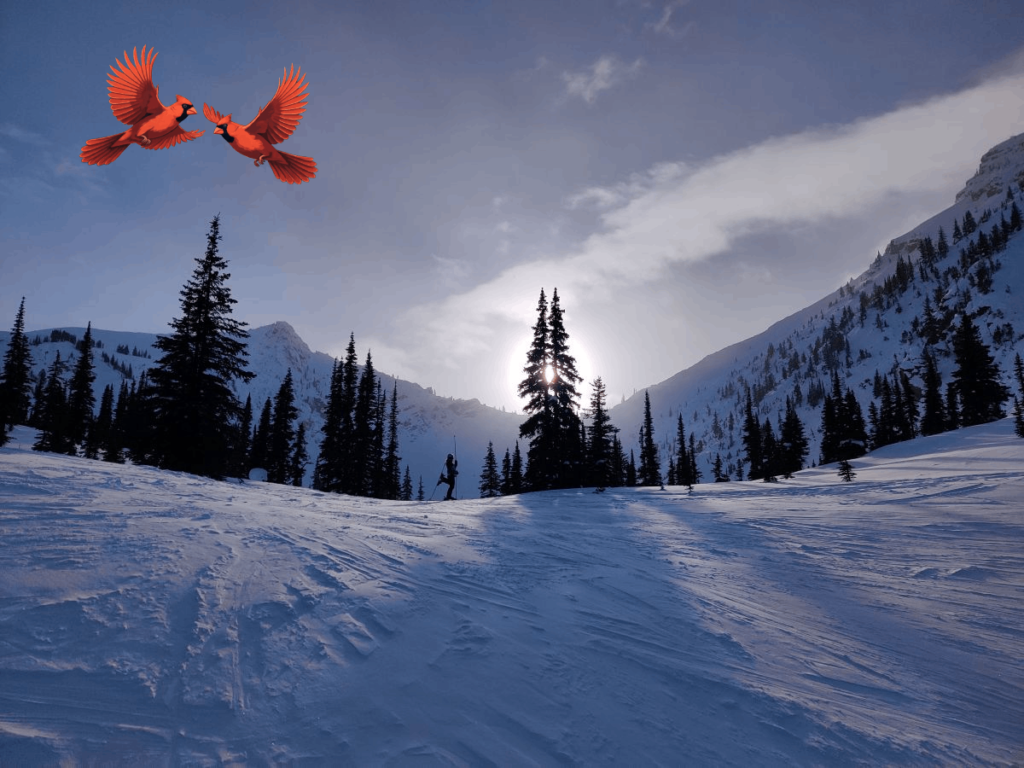
Hailing from Austria, skiing is in our DNA. So, it’s no surprise that skiing the Rocky Mountains has been a long-held dream of ours. In this blog post, we’ll take you on an incredible 9-day adventure along what’s often dubbed “Canada’s Powder Highway.” We explored four iconic ski resorts, namely Lake Louise, Sunshine Village, Norquay, and Kicking Horse, which are conveniently linked by Canada’s Highway 1. This post is a must-read, not only for avid ski enthusiasts but also for anyone looking to experience the magic of a true winter getaway.
So, WHY go to Banff in the winter?
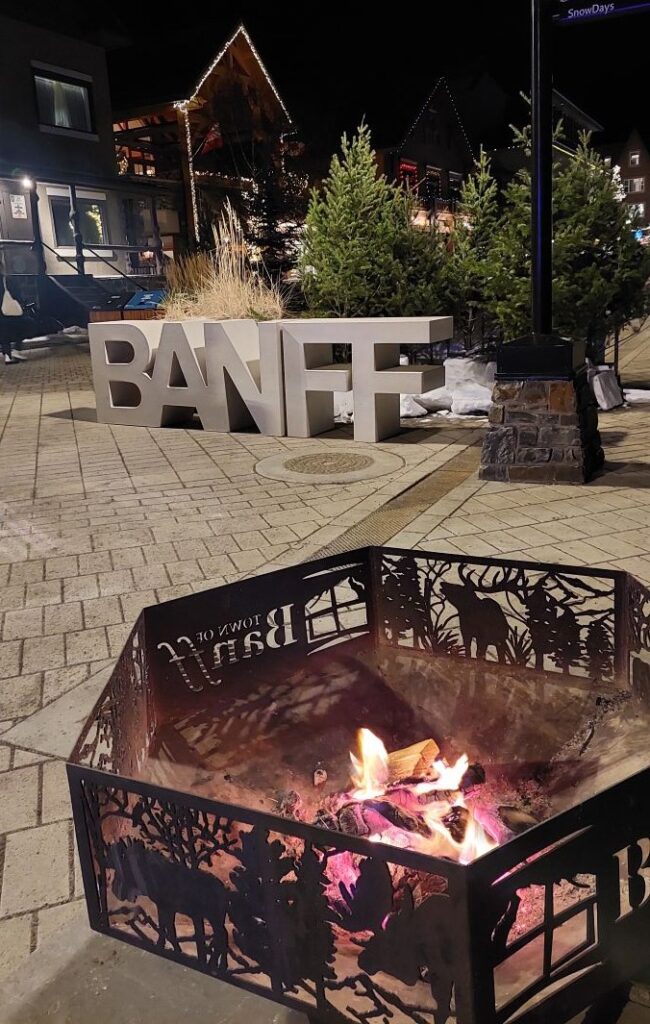
- Accessibility: Banff is easily accessible by taking the Airporter Shuttle from Calgary Airport. The journey takes just under 2 hours and is very comfortable. We cannot recommend this shuttle service highly enough, as you will learn later on. Also, Banff is the perfect base for exploring various ski resorts while also offering a range of off-slope activities.
- Downhill skiing: First and foremost, of course for skiing! Banff has the most skiable acres out of any Canadian National Park and it makes for a fantastic basis to reach various ski resorts comfortably – some of them even with a gratuity shuttle service for lift ticket holders. At this point we have to introduce SkiBig3, the three local ski resorts: Banff Sunshine, Lake Louise and Mt. Norquay, which are combined and visitors can buy a lift ticket that works for all three of them. The SkiBig3 pass is great since it offers a discount when multiple days are purchased and provides flexibility as it also allows you to have “rest days” in-between. Additionally, these ski resorts have something for everyone, from beginners to experts.
- Ski the divide: A unique experience awaits in the Sunshine Village resort: Here you can ski in two Canadian provinces – Alberta and British Columbia – in one run. Pretty dope, right?
- Freeride terrain: Sunshine, Lake Louise and, especially, Kicking Horse have extensive backcountry and slackcountry skiing. A free-riders dream! Warning: If an area is marked as a permanent or avalanche closure, take the signage seriously. Always inform yourself before ducking a rope or venturing off to find your own lines. Pay close attention to the weather forecast and snow conditions – your safety depends on it.
- Untouched nature: While skiing here, you’ll be treated to breathtaking views of untouched, pristine nature, with vast stretches where civilization feels miles away. Compared to, say, Austria, skiing in Canada offers a much stronger sense of being in the heart of nature, far from urban life.
- Snow conditions: The ski resorts around Banff and along Highway 1 are renowned for their supreme snow conditions and dry powder benefits from long winters and consistently cold temperatures. We have done looooots of skiing in the Alps, but the snow quality in the Rocky Mountains is just unparalleled. Being able to ski almost entirely on natural snow is a whole different story. You can literally experience long-lasting, bluebird powder days here. On a side note, Lake Louise Ski Resort and Banff Sunshine maintain perfect conditions throughout the season by using snow farming instead of relying on snowmaking. Also, according to the snow statistics, there’s a good chance you will catch some fresh snow when vacationing in Banff.
- Off-slope activities: If skiing or snowboarding isn’t up your alley, no worries, there’s plenty to enjoy off-slope as well. One might say, in Banff winter is still a thing – contrary to some other winter destinations, which hardly get snow anymore. So, what could you do besides hitting the slopes?
- ice-skating on natural ice (more on that later in this post!)
- snowmobiling
- dogsledding
- snowshoeing
- tubing
- ski-biking
- cross-country skiing
- heliskiing (blogpost on that coming)
- backcountry skiing
- experience Johnston Canyon in the winter
- ride up Sulphur Mountain with the iconic Banff Gondola for exciting activities
- soak in hot springs
- go on a horse drawn sleigh ride
- enjoy the rich food scene Banff has to offer -> high-end cuisine at affordable prices
- check out fun events in Banff (e.g., SnowDays Festival, Skijoring, Ice Magic)
- shopping in Banff
- visit the Whyte Museum of the Canadian Rockies
- Rediscover landmarks: Winter is low-season compared to summer in Banff, which is why you can explore some of the landmarks without the usual crowds. The famous Lake Louise or the popular Johnston Canyon are way less packed with visitors than in the summer. You can mostly drive your car up there, whereas in the summer you have to score tickets for a shuttle bus and ditch your car (e.g., for Moraine Lake – see our blog post on Banff in the summer soon). However, keep in mind, that you will not see the unique blue color of Lake Louise and Moraine Lake in the winter.
WHEN to go to Banff for skiing/snowboarding?
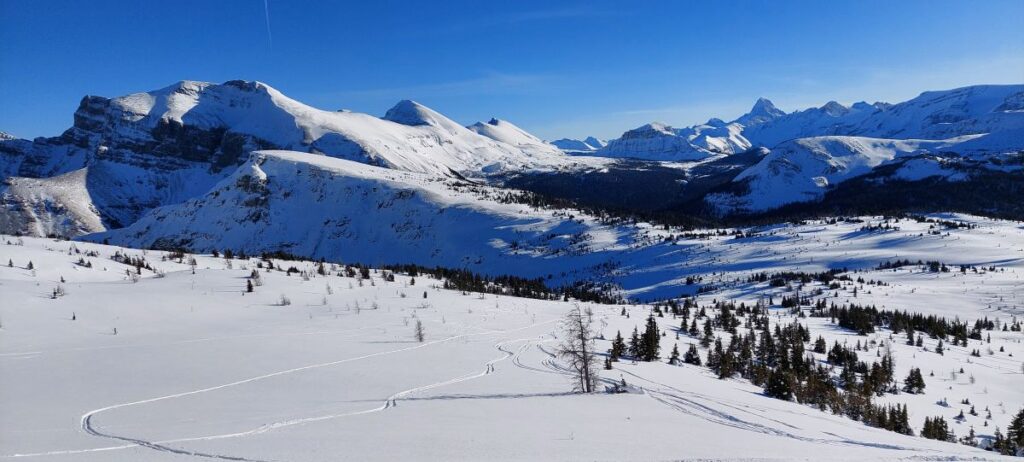
- January: We went to Banff in the second half of January. There were plenty of seasonal events and festivals in Banff at that time and absolutely no crowds on the slopes. Sometimes, it felt like we had the entire ski resort to ourselves. Unfortunately, that year, Banff and the surrounding ski resorts didn’t have tons of snow. However, compared to the “usual” snow levels in the European Alps nowadays, we were blessed with abundant snowfall in Canada. Winter is normally fully settling in here in January, and, as mentioned, there are plenty of seasonal events in Banff at that time. Although skiing season already kicks off in November, we wouldn’t necessarily recommend traveling to Banff before January, if you are seeking perfect snow conditions. Keep in mind that the days are rather short in January (sun rises well after 8 a.m. and sets around 5 p.m.).
- February: This month is peak season in Banff and the most popular month for skiing as the conditions are at their best. There will undoubtedly be more crowds than in January. However, the days begin to get slightly longer, allowing you more time to explore winter activities.
- March: January and February usually display frigid temperatures. During our vacation, the temperature ranged between -23 °C (-9,4 °F) and -2 °C (28,4 °F). There’s just no sugar-coating it, the weather is cold, extremely cold. In March, however, the likelihood of severe cold snaps starts to dwindle and the average daily temperature warms up. Despite the warmer weather, March often sees Banff’s biggest snowfall of the year, making this month a fantastic time to ski and snowboard.
- April: This month is a hidden gem in the calendar and can be superb in the Canadian Rockies. Skiing and snowboarding conditions generally remain excellent, but the temperatures are more moderate. However, the weather can be a little unpredictable. Mid-April also marks the opening of the Open Top Touring experience and typically the end of the ice-skating season on the lakes.
- May: In this month, spring really starts to take over. In early May you might still have a blast skiing around Banff, but we wouldn’t recommend going on a skiing vacation this late in the season.
Visit our blog post on Banff in the summer to find more information about the other months of the year in Banff (coming soon).
WHAT were our main highlights of this trip and what would we like to see next time?
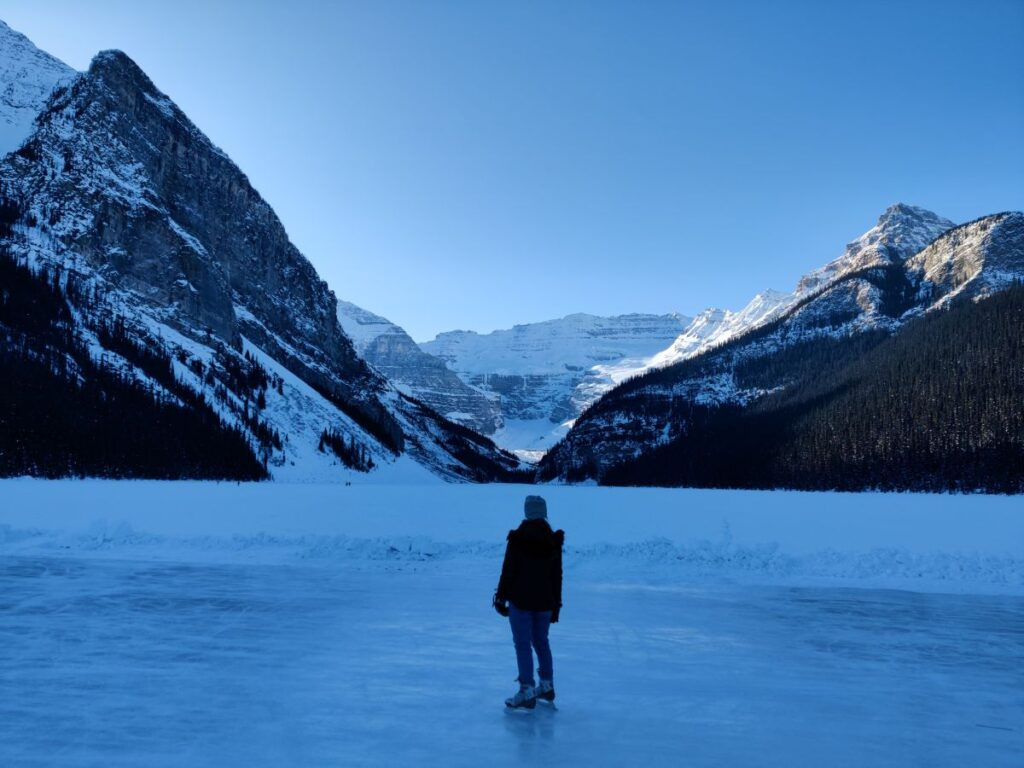
Undoubtedly, being able to ski on 90% natural snow was the main highlight of this trip. The other highlights, besides skiing, were:
- Ice-skating on Lake Louise: The scenery is just breath-taking. Ice-skating is for free here and one section of the lake is cleared of snowfall. Simply amazing and not to miss!
- Witnessing Skijoring on Banff Ave: A spectacular event where horses pull professional athletes down a course. Seeing skiers launching off huge jumps, performing backflips, spins and other tricks along with skilled horse riders racing at fast speeds, was just terrific.
- The rich food scene in Banff
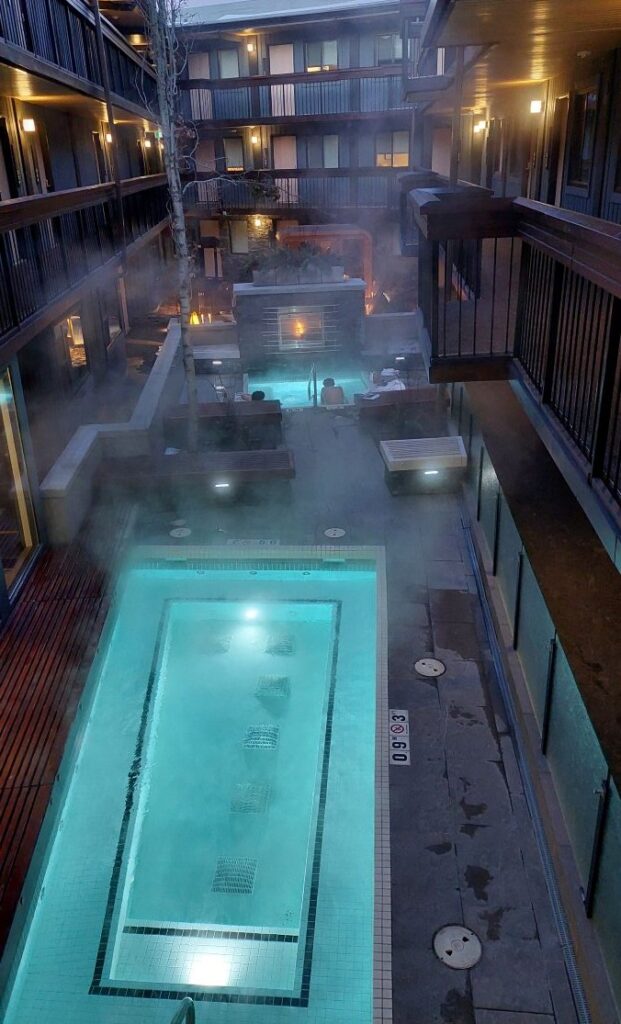
- The hot tubs in our hotel: If your budget permits, we recommend staying at a hotel with a hot tub. There’s simply nothing more delightful than soaking in warm water after a freezing day on the mountain. Alternatively, you can visit a hot spring (e.g., Banff Upper Hot Springs – we can’t comment on this since we didn’t visit this place).
Returning to Banff in the winter, we’d like to…
- explore the Panorama Ski Resort
- explore other lakes for ice-skating (e.g., Lake Minnewanka, Vermilion Lakes)
- ride up Sulphur Mountain with the iconic Banff Gondola (This comes at a steep price, which is why we didn’t do it, since we had enough views while skiing. But there are some fun activities at the top of Sulphur Mountain as well.)
So, WHERE did we ski?
Banff Sunshine Village:
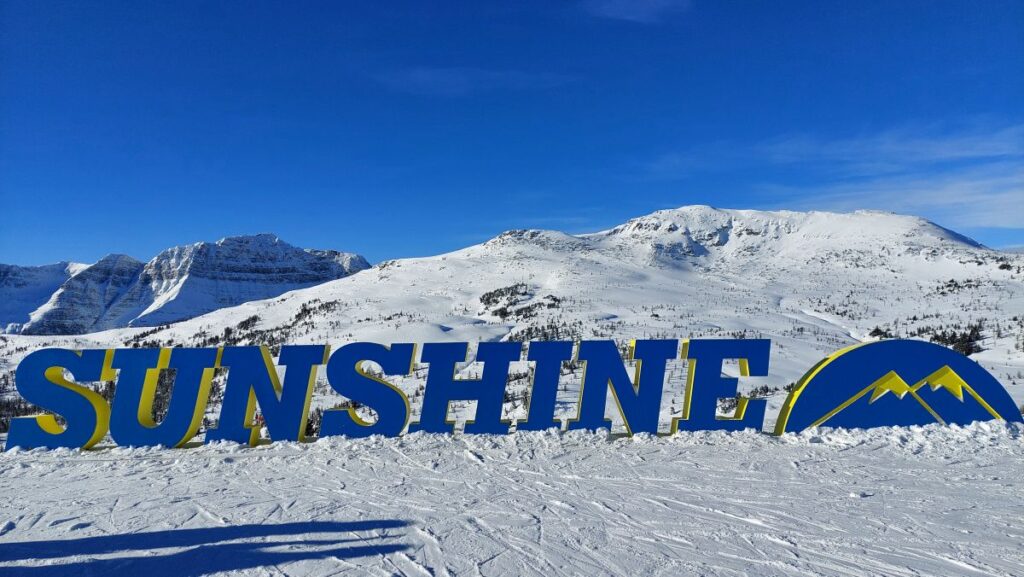
This was our favorite ski resort. It’s just about 17 kilometers (~11 mi) from Banff and there’s a free Sunshine Shuttle to and from Banff. Additionally, it’s part of the SkiBig3 area.
Banff Sunshine is a mountain resort that caters to all skill levels, from beginners to experts. Whether you’re carving down a gentle green run or exploring freeride terrain that would be off-limits at other resorts, there’s something for everyone. Towering jagged peaks rise above the alpine trees, offering unmatched views of pristine, untouched landscapes, uninterrupted by any signs of civilization. To us, here you’ll find the most stunning and panoramic views as you ply the slopes. You’ll be hard-pressed to find better views of Mount Assiniboine (3,618 m / 11,870 ft), the “Matterhorn of the Rockies”, than here.
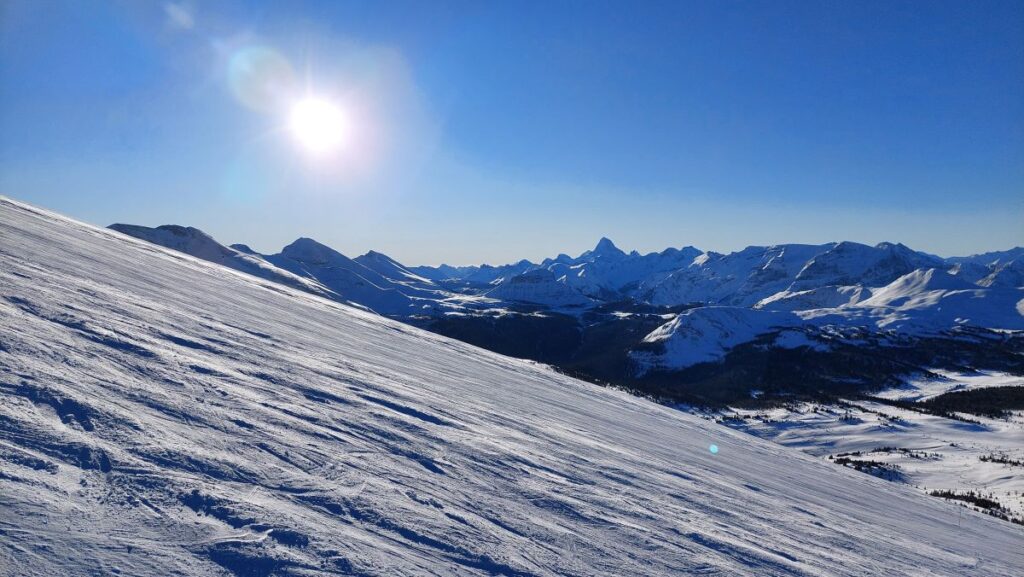
Other things that we really liked about this ski resort is that it is laid out very nicely. You’ll find runs that take you through cute groves. Additionally, they have a great hot chocolate bar in the Village on the mountain and even a day care unit for young kids and a mountain clinic.
Hidden gem: There’s a historical cabin stash in the woods. Join a complimentary tour of the ski resort to find out where it’s located.
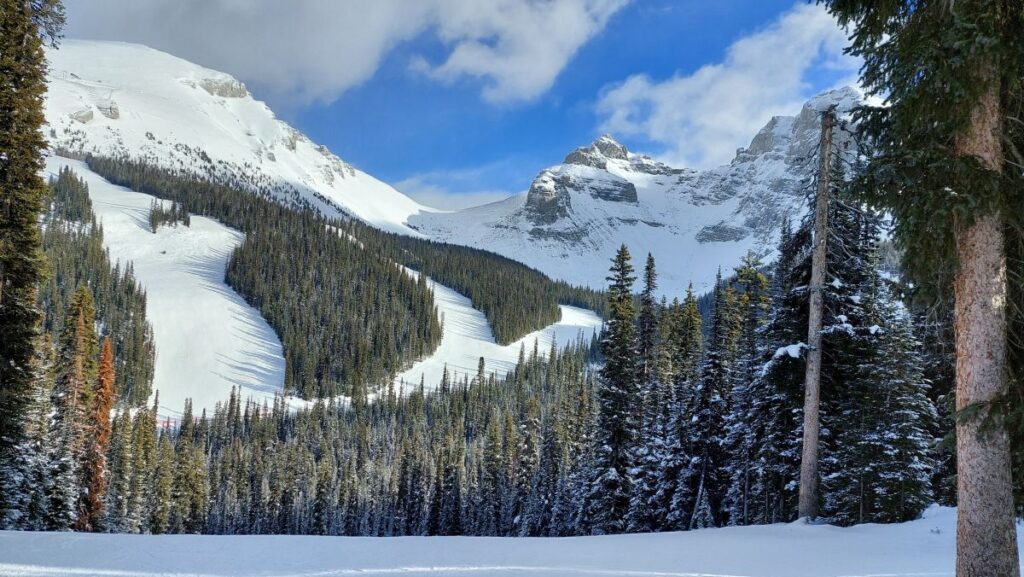
Pro tip 1 – Free mountain tours: The two biggest ski resorts of the SkiBig3 area offer free programs where experienced (volunteer!) mountain hosts ski with you around the resort, grouping participants by ability level. The tour we joined in Sunshine Village was the best. We were in a group with another advanced couple and guided by Jordan, whose “playground” has been Banff Sunshine since he was a toddler, and Meg, an Australian native who spends half of the year in the Banff area. During three hours, they showed us a huge variety of terrain, kept us entertained by regaling us with many interesting stories and facts about the area and brought us to a true hidden gem – the above-mentioned historical cabin stash in the woods. At the end of the day, we hadn’t just had a fantastic afternoon skiing with a great group, but also made some new friends.
Pro tip 2 – Cold weather: If you encounter very cold conditions during your skiing vacation in Banff, we recommend heading to Banff Sunshine instead of Lake Louise for skiing. The Sunshine Gondola, which takes you from the resort base to the top, takes about 15 minutes, giving you time to warm up inside. There’s also a mid-station, allowing you to board the gondola halfway down the mountain. Additionally, there are “warm-up tents” where you can heat up and enjoy your bagged lunch.
Pro tip 3 – Free water to quench your thirst: In the Goat’s Eye Lodge you can find water dispensers without having to buy any food or drinks.
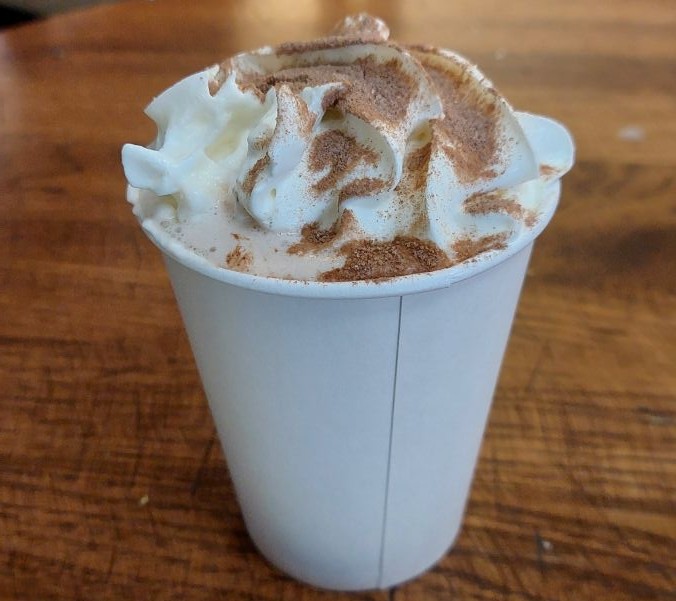
Pro tip 4 – Hot chocolate: Treat yourself to a delicious hot chocolate from the Coco Lab in the Day Lodge up in the village. Sip on the warmth and let it help you thaw out.
Lake Louise:
Lake Louise, another gem in the SkiBig3 area, is one of Canada’s most iconic ski resorts. It’s especially renowned for having hosted numerous World Cup ski races in the past. Lake Louise also happens to be one of North America’s largest ski resorts. The free shuttle bus from Banff takes about 45 minutes to get there.
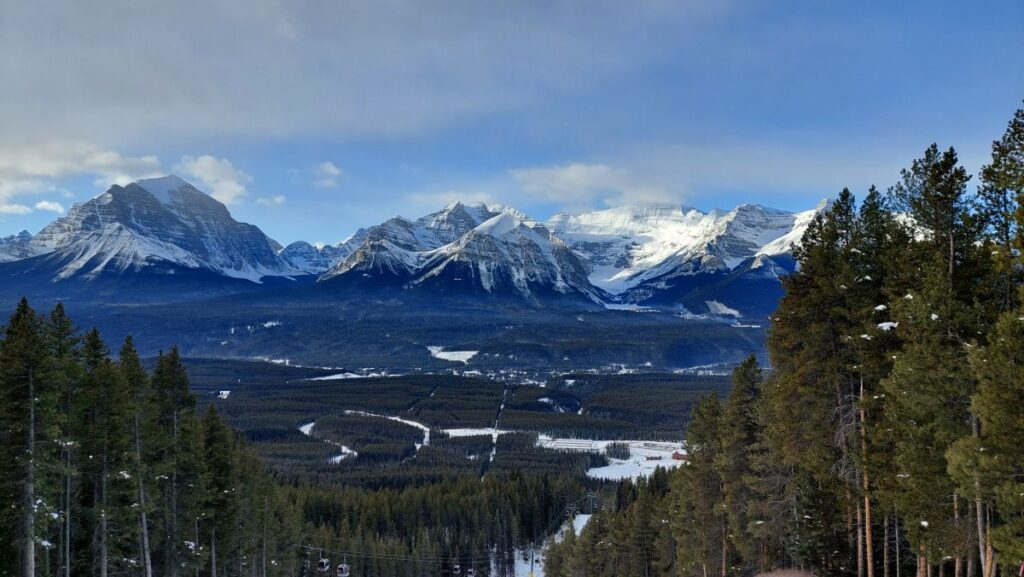
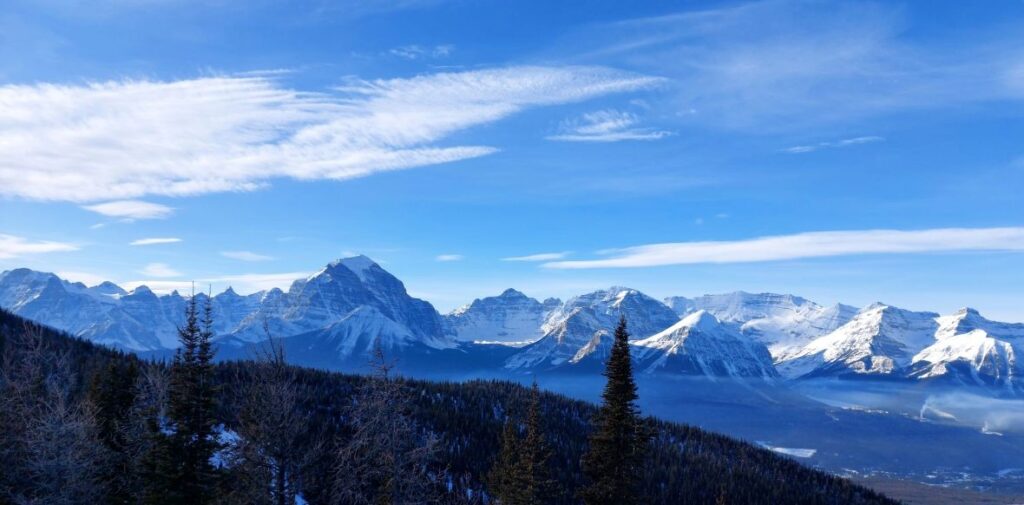
The terrain at Lake Louise offers a mix of beautiful groomers, challenging steeps, and expert-level chutes. Skiers of all levels will find something to enjoy. The views are absolutely breathtaking, especially those of Mount Temple and Lake Louise, with a vast, seemingly endless forest stretching across the valley below.
For lunch, we enjoyed a meal at the Whitehorn Bistro, a fancy and quite expensive restaurant located about halfway up the mountain. If you’re willing to sacrifice a bit of ski time, it’s definitely worth the price for a refined lunch experience.
In Lake Louise you might encounter snow-making and not entirely natural snow. When we were there, the snow was icier than at the Sunshine Village resort.
Pro tip – Free mountain tours: The two biggest ski resorts of the SkiBig3 area offer free programs where experienced (volunteer!) mountain hosts ski with you around the resort, grouping participants by ability level. We were in a group with another advanced skier from Canada and guided by Richard, a retired Canadian farmer, and Elsa, an AUSTRIAN (imagine the look on our faces!) woman, who has lived in Canada for 38 years and originates from Schladming. It was very interesting to listen to Elsa’s stories in particular, hearing about her life and what brought her to Canada in the first place (pure coincidence – a backpacking trip to Canada together with a friend in her youth). The tour didn’t last as long as the one in Banff Sunshine, this time “only” about 2 hours.
Mt. Norquay:
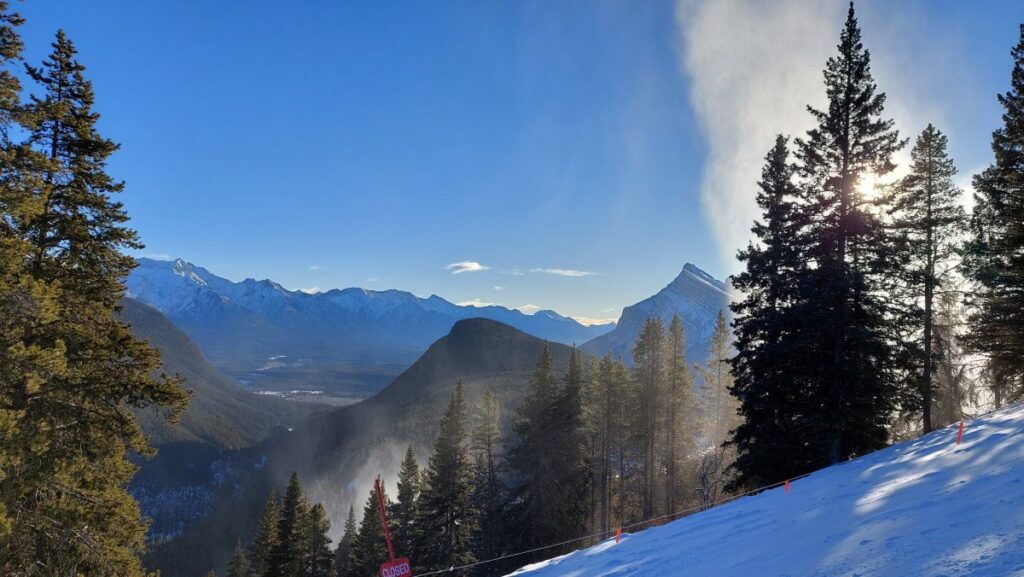
This is the smallest ski area in the SkiBig3 region, yet it’s the closest to Banff, just a 10-minute drive away. It’s also the most beginner- and intermediate-friendly, but in general, it doesn’t compare to Lake Louise or Sunshine. It’s small, making it ideal for a half-day of skiing. Nevertheless, despite its size, it has a good mix of trails for all difficulties.
The resort has been operating since 1926, and it shows when looking at the lifts ;-). That said, the tubing area looked really fun! Additionally, it’s the only mountain in the area with night skiing. The views from here over Banff are lovely, though we do prefer the views from Lake Louise, and especially from Sunshine.
Mt. Norquay’s major drawbacks are its limited snowfall, poorer snow conditions, and often icy runs due to its lower elevation. When we skied there, the snow quality was significantly worse compared to Sunshine Village and Lake Louise. We only spent a half-day there and used the rest of the day for ice-skating on Lake Louise. You might want to consider doing the same (or instead do another winter activity for the remainder of the day). Because of its small size, Norquay doesn’t have ski hosts.
Although it’s small and the snow conditions might not be perfect, we still recommend visiting Norquay for a half-day. Its close proximity to Banff makes it incredibly convenient, and besides, it’s nice to experience some vintage-style skiing there (gosh, the lifts look so dated, it’s like a soothing trip down memory lane!).
Kicking Horse:
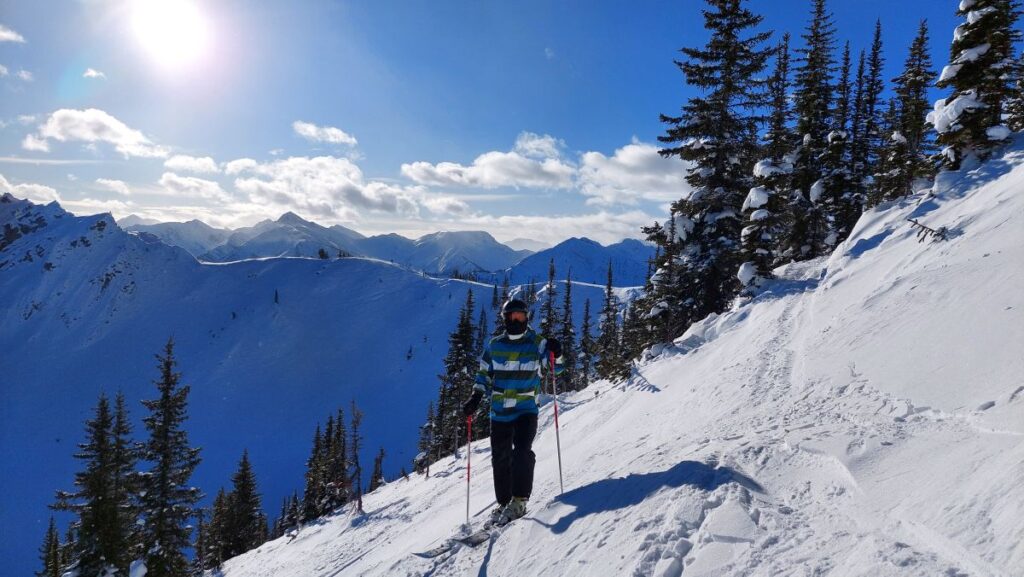
This ski resort isn’t part of the SkiBig3 region, so it requires a separate lift ticket. Funnily, it is dubbed the “Champagne Powder Capital of Canada.” We opted for the Kicking Horse Powder Express, organized by Discover Banff Tours, and were thoroughly impressed with their service. The shuttle picked us up around 7 a.m. and dropped us off at the resort after a 1,75-hour drive. We chose a package that included both the transfer and the Kicking Horse Mountain Resort ski lift ticket, which was a much more affordable option than purchasing the lift ticket separately.
Kicking Horse is a fantastic choice for those looking to add some serious thrills to their Banff ski vacation. While there are some easier slopes, the resort is primarily geared toward advanced and expert skiers. It’s packed with backcountry options, and though it’s not part of the Rocky Mountains, it offers panoramic views of them.
This ski resort felt pretty much like our own private ski resort! We hardly encountered anyone else that Tuesday.
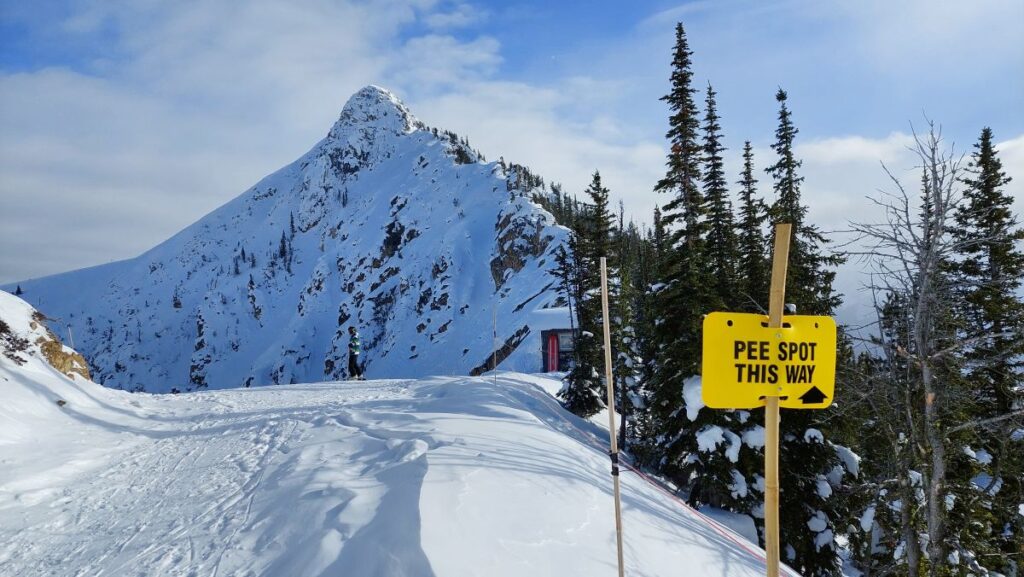
The main downside with Kicking Horse, however, is its lack of lifts. While the terrain is fantastic, some of the areas require quite a bit of walking to access, which can be a bit of a hassle. However, on a positive note, this leads to fewer people visiting this mountain resort.
Hidden gem: Make sure to visit the ski resort’s resident grizzly bear, Boo. Keep an eye out for his winter den, where he hibernates during the colder months – right next to the slope.
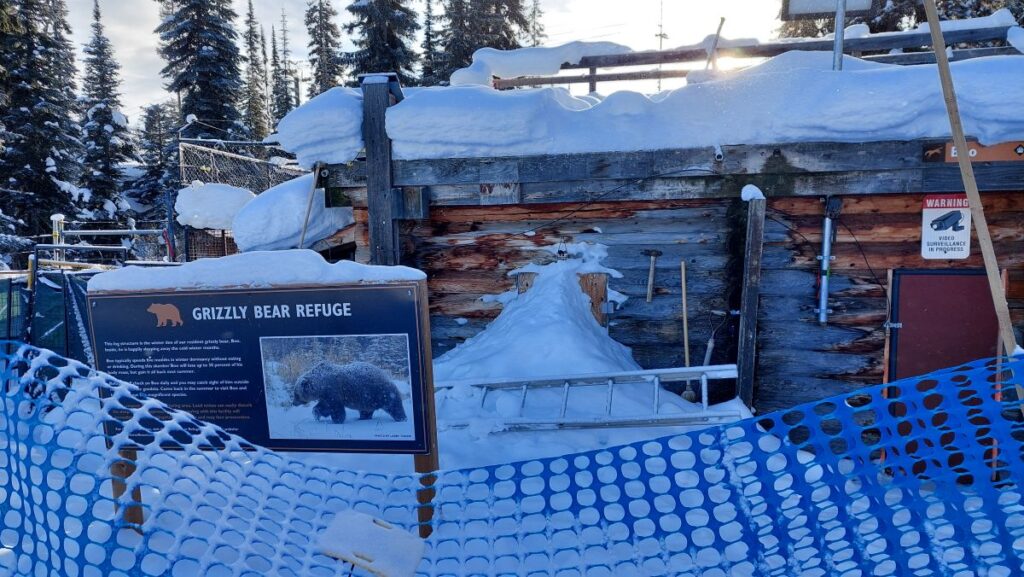
Pro tip – Free mountain tours: As with Lake Louise and Sunshine Village, this mountain resort offers free mountain tours. We took a tour with Bruce, a Canadian-born retiree who owns a house right next to the slope. This tour was the shortest, as guides in this resort are only allowed to take guests on green and blue runs, so it lasted only 30 minutes. Bruce showed us the Grizzly Bear refuge and shared some fascinating history with us. On that note, the Kicking Horse Mountain Resort got its name from the Kicking Horse River, which flows through the area. The river was named by explorer James Hector in 1858 after a horse kicked him while exploring the region. Despite the horse’s troublesome behavior, the name “Kicking Horse” stuck and was later adopted for the mountain and the resort. Thanks for this interesting info, Bruce!
Finally, HOW tackle skiing in the Banff-area?
How did we get to Banff and around?
We did consider renting a car, but due to the unpredictable winter weather, we decided to go with the shuttle bus called “Airporter” from Calgary Airport to our hotel instead. It turned out to be the perfect choice – everything went smoothly, and the shuttle service was not only incredibly convenient but also cost-friendly, reliable, and punctual.
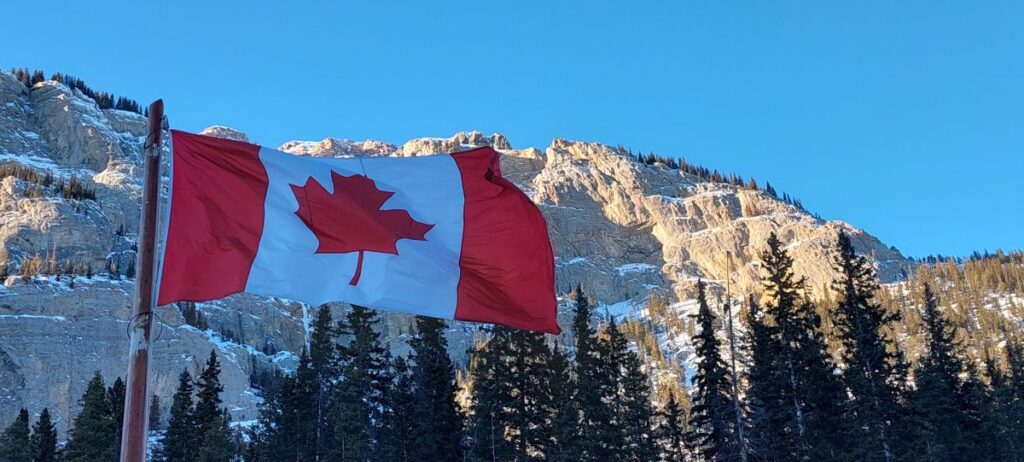
In Banff, we did everything by foot. The town is compact and walkable, making it easy to explore without needing a car. We strolled through the picturesque streets, visited several shops, and enjoyed the nearby restaurants and cafes.
To get to the SkiBig3 ski resorts, there are free shuttles. The organization of the ski shuttles is absolutely top-notch. The service is incredibly reliable, with frequent departures – nearly every hour – making it effortless to reach the ski resorts without any hassle. The shuttles are well-coordinated, punctual, and provide a comfortable ride. By taking the shuttle, you don’t have to worry about road conditions, so one less thing to worry about, allowing you to focus solely on enjoying your time on the slopes!
We traveled to Lake Louise (the actual lake, in this case) on the Banff Express Route 8X shuttle, operated by Roam Transit. The bus conveniently departed from right in front of Banff High School, and the fare was $10 per person for a one-way trip.
Pro tip – Ski shuttle bus: You might want to arrive a few minutes early at the shuttle bus stop to secure a spot on the bus. If the bus reaches full capacity, they’ll promptly send another one, so there’s no need to wait an entire hour for the next scheduled departure. When the shuttle bus arrives, there are “bus coordinators” present to assist with everything.
How to stay warm?
As mentioned above, it can get freakin’ cold here. Banff’s temperatures are some of the coldest in North America and the thermometer can easily drop to negative thirty degrees Celsius (-22° F). So, how stay warm? Well, you could soak in your hotel’s hot tub the entire day or visit hot springs, which obviously might not be the top choice for everyone, especially not avid skiers.
Besides bringing lots of warm layers and a pair of winter-proof shoes, there are two things that we’d recommend to pack when heading to Banff in the winter:
Pro tip 1 – Hand and toe warmers: Buy hand and toe warmers that you can tuck into your gloves and ski boots. Surprisingly, they didn’t bother us while skiing, and they also didn’t pinch in the shoes. We bought them from a brand called “Hothands.” You can also purchase them in the ski resorts or in Banff, but it is way cheaper to buy them online beforehand.
Pro tip 2 – Liner gloves: Wear ski glove liners, preferably made from Merino wool, under your ski gloves. They provide excellent insulation and significantly help in keeping your fingers warm on the slopes.
How to save money on lift tickets?
Skiing in North America is expensive. Very expensive. While skiing in Banff is slightly more affordable than in major US ski resorts, it can still make a dent in your wallet. We saved quite considerably by buying a package from SkiBig3, which included the transfer from Calgary Airport, the hotel, and two 6-out-of-8-day SkiBig3 lift tickets. You could also add ski, boot, and pole rentals to your package and pick them up at the SkiBig3 Adventure Hub. In our case, we opted for high-performance skis and found Ultimate Sports’ offer more appealing.
Everything with the package worked out really well. The shuttle bus, organized by Airporter, exceeded our expectations and was completely to our satisfaction. Our lift tickets were conveniently left at our hotel’s front desk upon arrival. We therefore highly recommend considering a package from SkiBig3 (just to note, we’re not affiliated with this company and aren’t compensated for mentioning them – they may not even know!).
Pro tip 1 – Early bird discount: If you book your ski packages/lift tickets well in advance, you might be able to save considerably.
Pro tip 2 – Costco members: Some people we met took advantage of Costco member savings on lift tickets. It’s definitely worth checking this option.
Where to stay in Banff?
On a side note, some people stay in Canmore. Initially we’d also considered staying at one hotel there and we were glad that we didn’t. For a skiing vacation, Banff is just closer to all the ski areas and therefore preferable.
We stayed at the Banff Aspen Lodge. Nestled in the heart of Banff, the Banff Aspen Lodge offers the perfect combination of comfort, convenience, and charm. From the moment we arrived, we were struck by the inviting atmosphere of this hotel. It is ideally situated on Banff Avenue, just a short stroll from the town’s vibrant shops, restaurants, and cafes. Our room was spacious (two separate bedrooms with a bathroom right in the middle), immaculately clean, and thoughtfully designed. We especially loved the breathtaking view of the Rockies from our room.
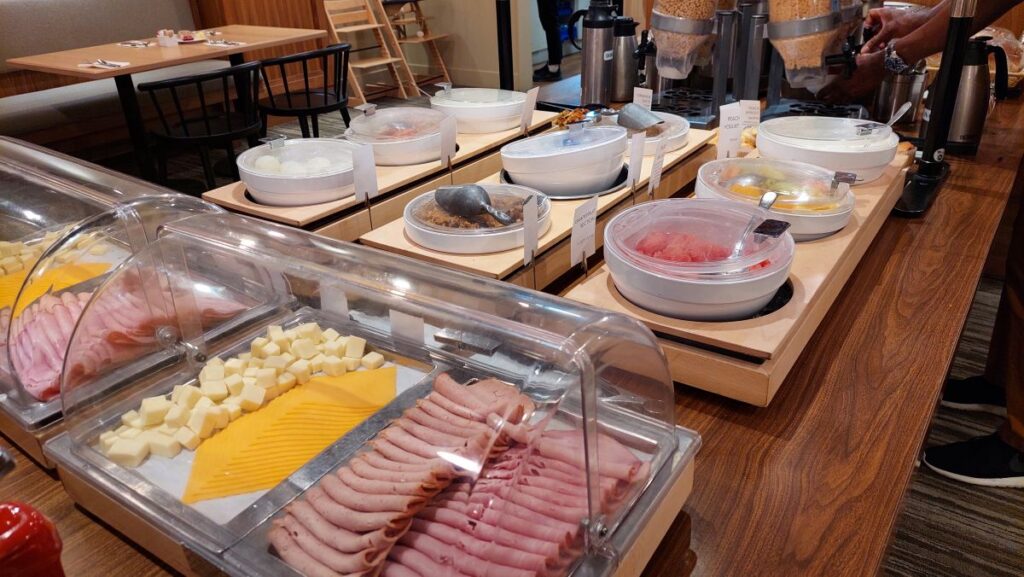
The hotel’s breakfast was great and set us up for the ski day. It included a delicious variety of home-made pastries and granola, fresh fruits, hard-boiled eggs, and other hearty options. It was the perfect fuel for a day on the slopes or hiking trails. One of our favorite features of the Banff Aspen Lodge was the outdoor hot tubs. Relaxing in the warm, bubbling water right next to an outdoor fireplace while gazing up at the night sky, was an unforgettable experience. Just the ideal way for us to unwind after a day of skiing. The staff was friendly, professional, and ready with helpful recommendations about activities. Moreover, the on-site coffee shop, named Whitebark Café, serves excellent coffee and snacks.
Just as a side note, we’re not affiliated with this company and aren’t compensated for mentioning them – they may not even know!
Pro tip 1 – Location, location, location: If you don’t have a car, we’d highly recommend that you stay in a hotel close to Banff’s downtown. Otherwise, it might be quite uncomfortable to grab dinner (or breakfast), especially after a long day of skiing. Also, you should check the distance to the closest ski bus stop.
Pro tip 2 – Breakfast: We were so happy to have booked a hotel that included breakfast with the room. Skiing on an empty stomach isn’t a great idea and it saves tremendous time to get breakfast right where you’re staying. The breakfast at our hotel was exceptional. Home-made granola and pastries, along with fresh fruits and a good assortment of hearty food, made it perfect for us.
Pro tip 3 – Hot tub: If your budget allows, it is incredibly comfortable to have a hot tub at your hotel. There’s just nothing better than floating in warm water after a day on the mountain.
Where to rent equipment?
There are plenty of options for renting winter sports gear in Banff. We rented our skis from Ultimate Sports, which has an extensive selection of equipment. Our skis were from the Austrian brand “Kästle” and the American-Austrian company “Head” (Total Joy model). One pair was completely new and the other was in perfect condition. Our ice-skates we rented from a shop called Snowtips-Bactrax. This equipment was also in very good condition and we were highly satisfied.
Pro tip – Ski boots: We just rented skis and poles and brought our own ski boots. If you have your own boots, we recommend bringing them and just renting the skis. In our opinion, it’s not worth the hassle to bring your own skis, but having your own boots is definitely something to consider.
Where to eat in Banff?
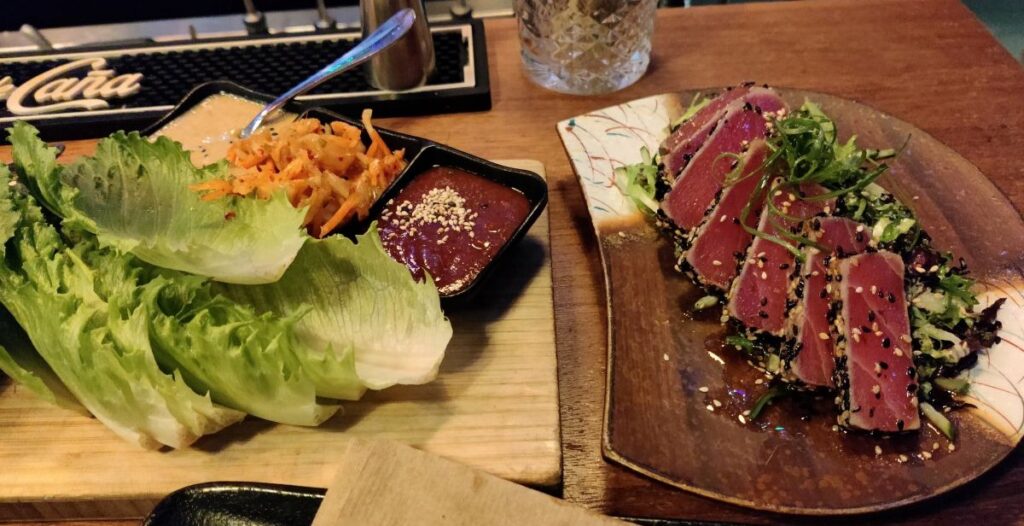
For those who’ve worked up an appetite on the slopes, Banff has plenty to offer. This town isn’t just about breathtaking mountain views and outdoor adventures – it’s also a destination for food enthusiasts. A food lover’s dream come true, one might say. The town may be small, but its culinary scene punches well above its weight, offering something for everyone, from casual eats to high-end dining experiences. What we found really surprising is that Banff boasts a variety of international cuisines. Craving sushi, ramen, or curry? You’ll find it here.
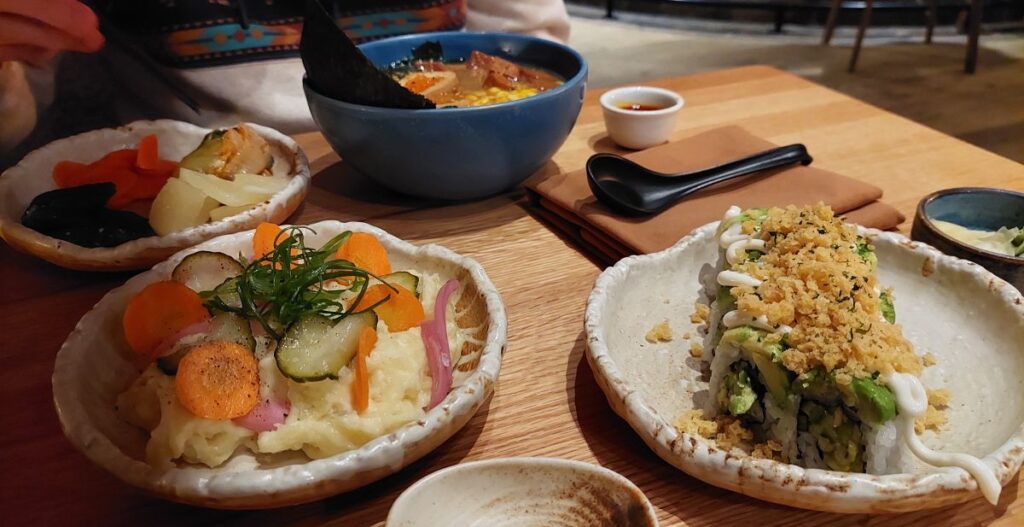
Our favorite spots to eat included: Hello Sunshine Sushi & Karaoke, Nourish Bistro Banff, Fondue at the Grizzly House (we recommend ordering the cheese fondue as a starter, the meat fondue as the main course, and the chocolate fondue for dessert – package for 2 persons), Block Kitchen + Bar, Hankki Banff + Dessert, The Whitebark Café, Little Wild: Coffee & Gelato.
For those outside North America: Is it really worth the hassle of flying all the way to Canada just for skiing?
Definitely YES – but, like most things, the answer can totally vary from person to person. This ski vacation was truly memorable for us and the best one we ever had. Skiing in Canada is quite different from what we’re used to in Austria, so we’d like to wrap up this post with a quick comparison to Austria/the Alps:
Our pros for skiing in Banff (at the end of January):
- Fewer crowds: We encountered way fewer crowds than in the Alps. Except for one day (Sunday), we didn’t see a line at a lift.
- “The snow is just different!”: We met a family from Kassel, Germany, who told us they go skiing in Canada every five years. They’ve been to Whistler (which they said was crowded) and to Banff multiple times. Their friends often ask them why they travel so far for skiing when Austria and Switzerland are much closer. Their answer: “Because the snow is different.” And we completely agree. The snow in the Banff area is grippier and mostly natural.
- “Off-civilization vibes”: Skiing with views of untouched nature definitely gives you that “off-civilization” feeling.
- Great service: The resorts hire tons of young staff from the Commonwealth area. All the seasonal workers seem to come from the UK, New Zealand or Australia (except for one guy from Germany, that we met 🙂 ). There are people at the base of the mountain, scanning your (old-school) lift tickets. There is staff that puts your skis into the designated spots at the outside of the gondola and hands them back to you at the top. How comfortable! Which brings us to the next point.
- Comfort: We loved the little touches, like tissue boxes at lifts for your runny nose, complimentary ski host tours, warming tents for enjoying your packed lunch, and seamless shuttle service to and from Banff. Additionally, if you want to hit the slopes without your youngest ones, you can drop them off at a daycare facility at Sunshine Village for an extra charge.
- Food scene: There’s a surprising variety not of restaurants but of cuisine on the mountain – think tacos, ramen, sushi, Canadian beavertail and more.
Drawbacks:
- Fewer restrooms: There are way fewer restrooms and ski lodges on the mountain than in Austria.
- The frigid temperatures: It’s much colder in Banff than the typical skiing weather in the Alps.
- The steep lift prices: The lift prices are high compared to Austria, though still more affordable than in the US.
- Dated lift facilities: Some of the lifts feel pretty dated compared to those in the Alps. A lot don’t even have footrests. However, newer lifts are popping up with bubbles and heated seats. Also, the lift tickets are pretty old-school – clip them to your jacket, and they get scanned every time you reach the resort base.
Should these drawbacks affect your decision to go? Definitely not!